Most people who end up here had never heard of Sertã before they started looking. It sits in the Pinhal Interior — the pine interior — in the district of Castelo Branco, in the middle of Portugal, well inland from the coast and a long way in spirit from the Algarve.
This is a description of the area written by people who chose it, live about nine kilometres outside it, and use it every week.
The town
Sertã is a working town of a few thousand people, not a tourist village and not a hamlet that shuts at lunchtime. It has what you need:
- Supermarkets — including the full-size chains, not just a mini-mercado
- Banks, a post office, pharmacies
- A health centre, with regional hospitals within reach
- Restaurants, cafés and the usual excellent Portuguese habit of a proper lunch for under ten euros
- A weekly market
- Schools
- Builders’ merchants, agricultural suppliers, mechanics — the unglamorous things that matter enormously when you own land
For a serious shop, a specialist appointment or an airport run you would drive to Coimbra, around an hour and a half, or Castelo Branco. Lisbon is about two hours direct, and the coast about an hour.
The landscape
Pine and eucalyptus over steep hills, cut through by river valleys. Olive terraces, smallholdings, and a lot of quiet. It is green in a way that surprises people who expect Portugal to be arid — this is not the south.
The land here is worked rather than manicured. Small plots, old stone walls, fruit trees that somebody’s grandparents planted. It rewards people who want to be involved with a piece of ground rather than look at one.
The river beaches
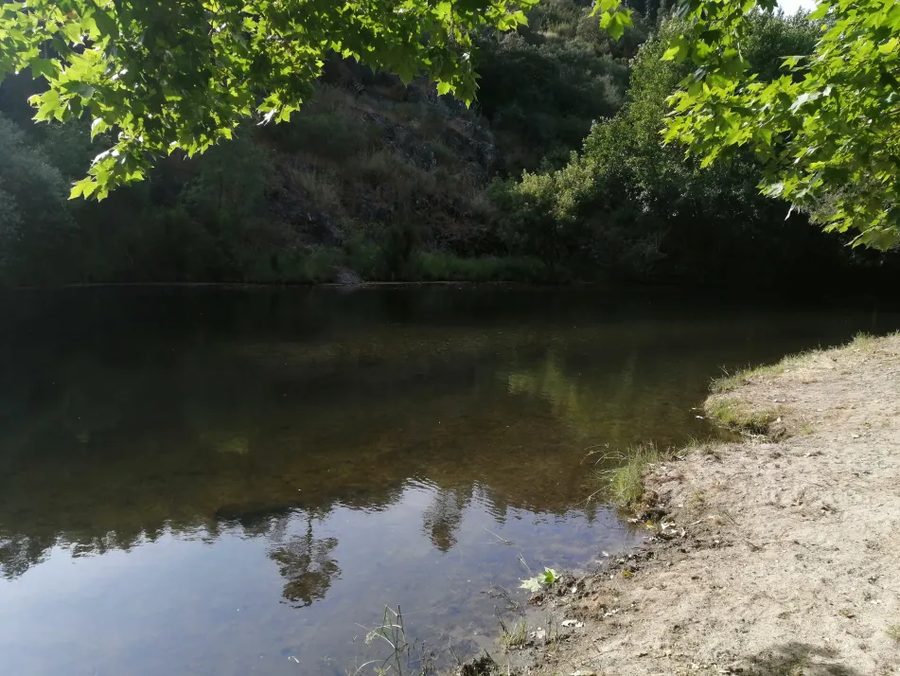
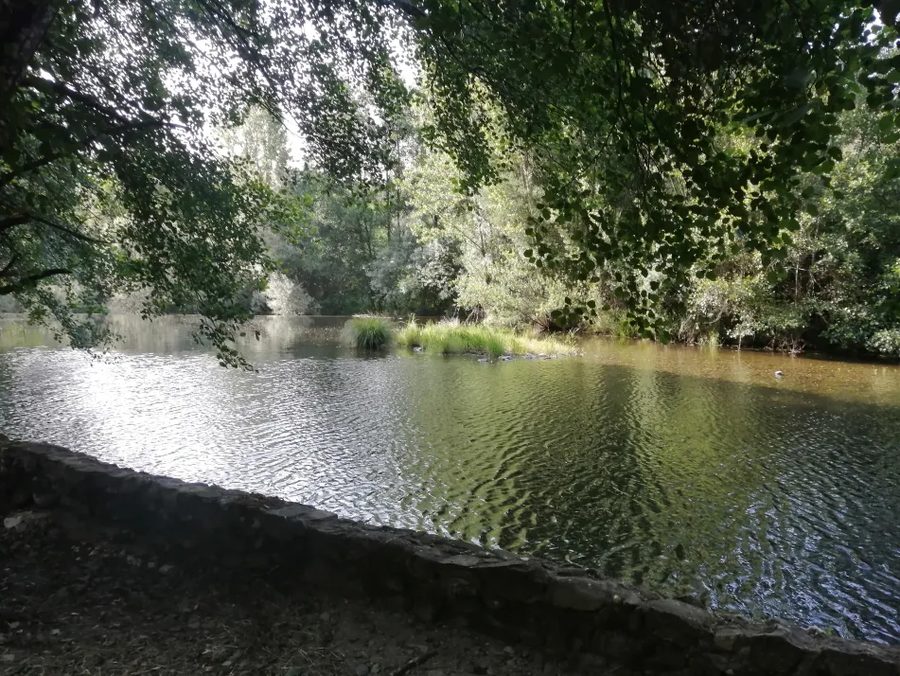
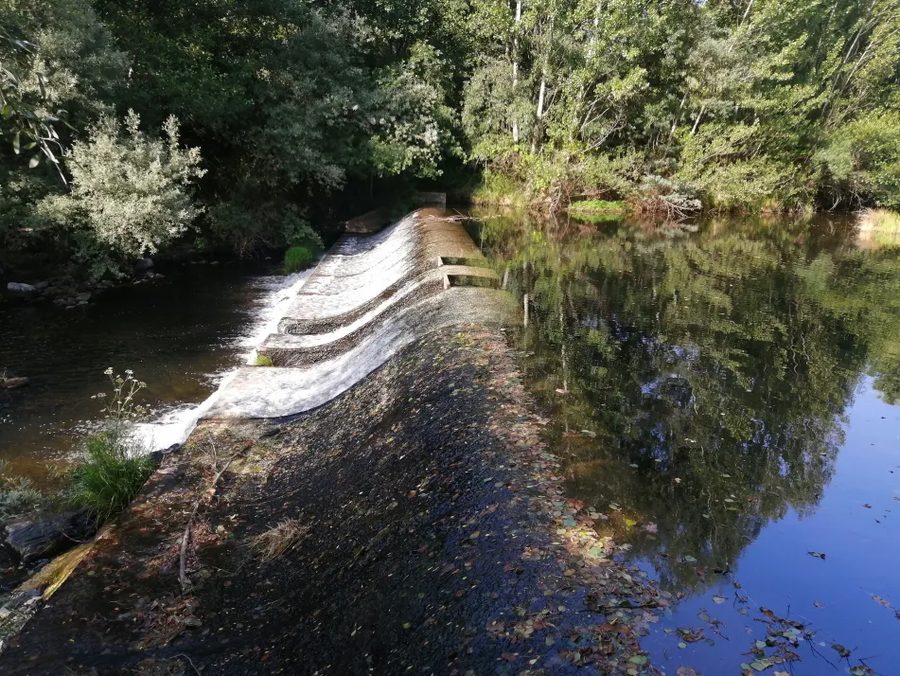
The thing the region is genuinely known for. Central Portugal has praias fluviais — river beaches, where a weir slows a river into water deep and clear enough to swim properly. Sand, trees to the edge, and shade you can actually sit in when it is thirty-five degrees.
There are dozens across the Pinhal Interior and the good ones are very good. They are free, they are maintained, and from June to September they are where the district spends its afternoons.
The weather
- Summer — hot and dry. Thirty-plus for weeks. The river beaches are not a novelty, they are the coping strategy.
- Autumn — the best season, arguably. Warm days, the fruit coming in, the hills going quiet.
- Winter — cooler and considerably wetter than the postcard version of Portugal. Frost inland, damp, and you will want proper heating. Anyone who tells you otherwise has not spent a January here. Wood is what most houses run on, and most people put a few weekends a year into the woodpile.
- Spring — fast and green. Everything happens at once.
Being honest about the drawbacks
Rural central Portugal is not for everyone, and the people who leave usually leave for the same reasons:
- You will drive. There is no useful public transport for daily life.
- Bureaucracy is slow. Nothing is achieved in an afternoon. Patience is not optional.
- Winters are quiet. If you need a social calendar, build one deliberately.
- Land maintenance is a legal duty. Portuguese law requires landowners to keep cleared, defensible space around buildings as a wildfire precaution. It is a straightforward seasonal job rather than a drama, but it is one you take on with the land.
- It is genuinely rural. Deliveries take longer, tradespeople come when they come, and the nearest anything is a drive.
None of that has driven us out in the years we have been here. But we would rather you weighed it now than found out later.
Why people come anyway
Space, and the cost of it. Land you could not dream of affording in Britain, Ireland or the Netherlands. Food that is cheap and actually tastes of something. Somewhere children can be outside without supervision. A pace that lets you think.
And increasingly, people who can work online and have worked out that the internet does not care which hill you are sitting on.
This is where the property is
An 11,100 m² smallholding nine kilometres from Sertã, sold with the business that pays for living here.
Interested?
Tell us where you are in the process. If it looks like a fit we'll talk properly, and if it isn't we'll say so quickly.